Why You Feel Worse After Eating Salad (And What to Do About It)
You swapped the burger for a salad, did everything right, and somehow ended up more bloated and exhausted than before. It feels like your body is punishing you for trying to be healthy, and honestly, that frustration makes complete sense.
Why This Happens After 40
After 40, your digestive system slows down in ways that most people never talk about. Stomach acid production decreases, enzyme output drops, and the gut lining becomes more sensitive to certain foods. What your body handled easily at 25 can now trigger a full-blown inflammatory response.
Raw vegetables are some of the hardest foods for a sluggish digestive system to process. They are high in insoluble fiber, packed with compounds called FODMAPs, and loaded with raw plant material that takes serious digestive firepower to break down. When that firepower is running low, the fiber sits in your gut and ferments. Gas, bloating, cramping, and fatigue are not signs you ate something wrong. They are signs your digestive system is struggling to keep up.
Add in the fact that cruciferous vegetables like kale, broccoli, and cabbage contain goitrogens and raffinose, a sugar that humans literally cannot fully digest, and you have a recipe for misery in a bowl that cost you twelve dollars.
The Real Problem (It Is Not What You Think)
Most people assume they just need to eat more salad and push through the discomfort. They think their body will eventually adapt. That belief is costing them energy, comfort, and results.
The real issue is not the vegetables themselves. The problem is the form they are in when they reach your gut. Raw plant cells have rigid walls made of cellulose. Breaking those walls down requires both mechanical chewing and strong digestive enzymes. After 40, enzyme production can drop by as much as 50 percent compared to your twenties. That means large chunks of undigested plant material are passing into your large intestine where bacteria ferment them and produce gas.
Your body is not broken. It is under-resourced. And a pile of cold raw kale is not the solution, no matter how many health influencers tell you it is.
The irony is that some of the most nutrient-dense vegetables become more bioavailable when they are lightly cooked, blended, or juiced. Breaking down the cell wall before it reaches your gut means your body actually absorbs more nutrients with far less digestive stress. You end up getting more out of the food while feeling a fraction of the discomfort.
What You Can Do About It
Switch to warm or lightly cooked vegetables at least half the time. Steaming broccoli, roasting zucchini, or sauteing spinach breaks down a significant amount of that tough cellulose before it even enters your mouth. You still get the fiber and micronutrients, but your gut does far less work to access them.
Add a digestive enzyme supplement before large meals. These are widely available and can make a noticeable difference within days. Look for a broad-spectrum formula that includes amylase, protease, lipase, and cellulase. Cellulase specifically helps break down plant fiber and is often missing from cheap formulas.
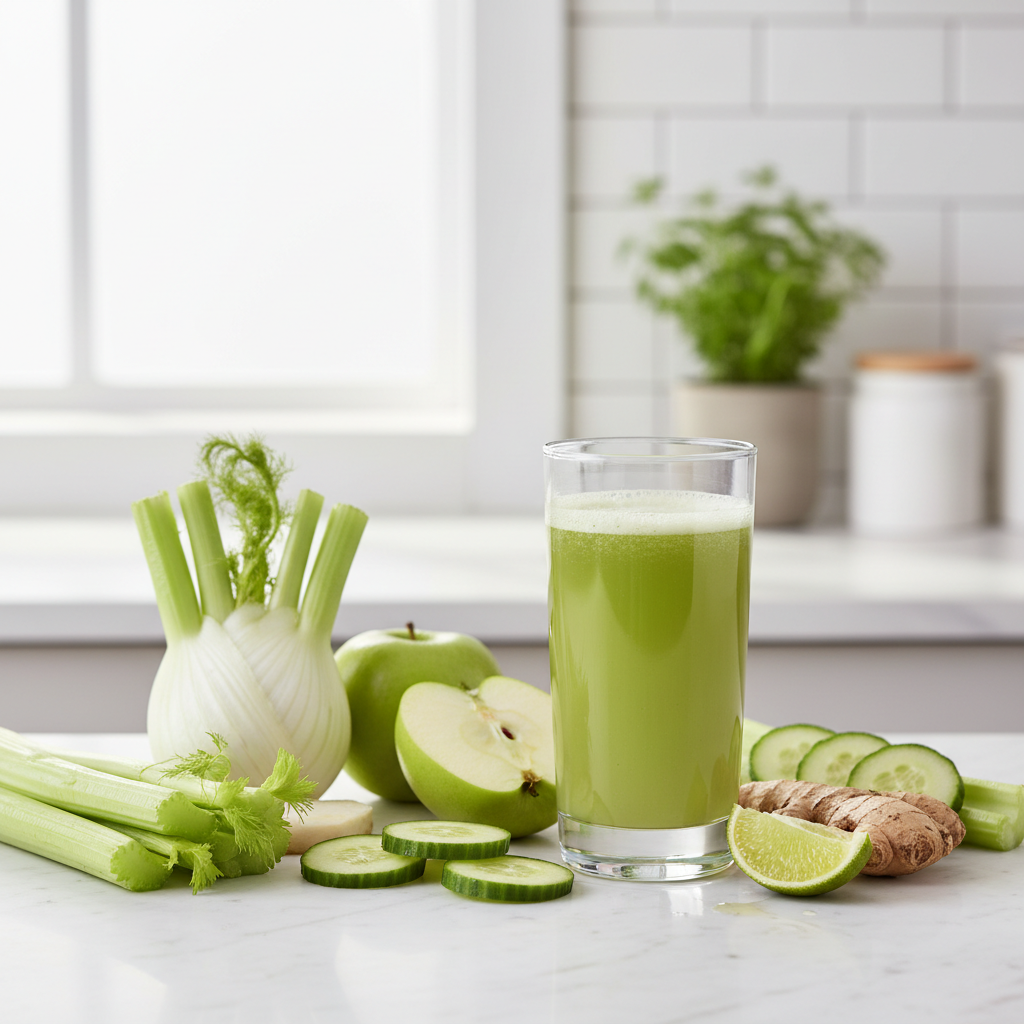
Replace one raw salad per day with a fresh vegetable juice. Juicing removes the insoluble fiber entirely, delivering concentrated vitamins, minerals, and enzymes directly to your bloodstream without taxing your gut. This is especially useful for people dealing with chronic bloating, joint inflammation, or persistent low energy after meals. It is not about eliminating fiber from your diet entirely. It is about giving your digestive system a break while still flooding your cells with nutrition.
Identify your personal trigger vegetables. Kale, raw onion, cabbage, broccoli, and Brussels sprouts are the most common offenders for people over 40. Try eliminating them for two weeks and replacing them with cucumber, zucchini, romaine lettuce, and cooked carrots. Track how you feel. You may find that three or four specific vegetables are responsible for most of your symptoms.
Chew more than you think you need to. This sounds almost insultingly simple, but most people chew each bite five or six times before swallowing. Aim for twenty to thirty chews per bite. Saliva contains amylase, the first digestive enzyme in the chain. The more you chew, the more pre-digestion happens before the food even reaches your stomach. For an under-resourced digestive system, this matters more than most people realize.
Start Your 365-Day Juice Program
365 daily juice recipes, done-for-you grocery lists, and juicer guidance for life over 40 — one payment of $37.
Start Your Reset — $37 →Keep Reading
Start Your 365-Day Juice Reset
365 daily juice recipes, done-for-you grocery lists, and juicer guidance for life over 40 — one payment of $37.
Start Your Reset — $37