Why Your Ability to Metabolize Fructose Declines After 40 and How It Causes Hidden Bloating and Energy Dips
You switched to fruit juices and smoothies to get healthier, but now you feel worse. The bloating is real, the afternoon energy crash is real, and you are starting to wonder if healthy food is somehow working against you. It is not your imagination, and it is not a lack of willpower. Your body has changed how it handles fructose, and most people over 40 have no idea.
Why This Happens After 40
Fructose is the natural sugar found in fruit, fruit juice, honey, and high-fructose corn syrup. Your small intestine absorbs it through a protein called GLUT5. The problem is that GLUT5 activity decreases as you age.
When you are younger, your gut moves fructose efficiently into the bloodstream. After 40, that transport slows down. Fructose that does not get absorbed in the small intestine moves into the large intestine, where gut bacteria ferment it. That fermentation produces gas, bloating, and inflammation.
At the same time, your liver becomes less efficient at processing the fructose that does make it through. Your liver converts fructose into energy or stores it. After 40, sluggish liver function means more fructose gets converted to fat and uric acid instead of usable energy. That is where the energy dip comes from.
Hormonal changes make this worse. Declining estrogen and testosterone affect insulin sensitivity and gut motility. Your digestive system moves more slowly, which gives fructose more time to sit and ferment before it even reaches the large intestine.
The Real Problem (It's Not What You Think)
Most people assume bloating and fatigue after eating fruit means they have a sensitivity to healthy food or that their gut is just difficult. That framing keeps you stuck.
The real issue is volume and timing, not fruit itself. Your body can still handle fructose. It just cannot handle the same amount, in the same concentrated forms, at the same speed it once could.
A single apple contains around 10 grams of fructose. A glass of apple juice can contain 25 to 30 grams in a few minutes. When you juice several fruits together and drink it quickly, you are flooding a slower, less efficient system with a concentrated sugar load it was not designed to handle at your current age and metabolic state.
The bloating you feel two to four hours after a fruit-heavy juice is not a coincidence. That is the fermentation window. The energy crash that follows is your liver struggling to process what came through.
This also matters for inflammation. Fructose that gets converted to uric acid raises uric acid levels in the blood. High uric acid is directly linked to joint pain, gout, and systemic inflammation. If your joints have been aching more and you have been drinking a lot of fruit juice, that connection is worth taking seriously.
What You Can Do About It
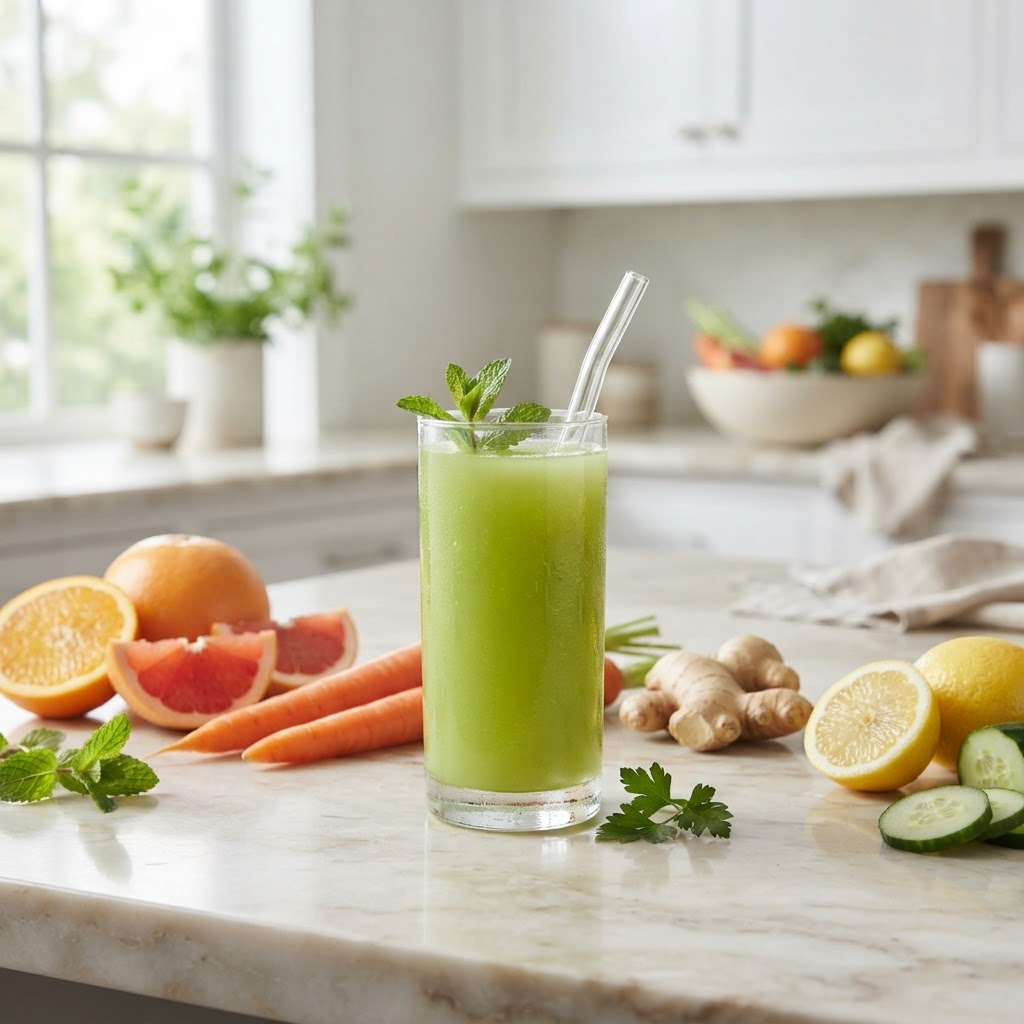
Shift the ratio from fruit to vegetables. A juice that is 80 percent vegetables and 20 percent fruit gives you the nutrients and flavor without the fructose overload. Cucumber, celery, spinach, kale, and zucchini are low-fructose bases that your gut handles easily.
Use whole fruit instead of juice when possible. Fiber in whole fruit slows fructose absorption and gives GLUT5 time to keep up. When you remove fiber through juicing, you speed up absorption and overwhelm the system. If you are juicing for gut rest or specific therapeutic reasons, keep portions small.
Limit high-fructose fruits. Apples, mangoes, grapes, pears, and watermelon are the biggest offenders. Lower-fructose fruits like berries, lemons, limes, and kiwi are easier on your system and still bring antioxidants and flavor to a juice.
Add liver support ingredients. Beets, dandelion greens, ginger, and turmeric all support liver function and help your body process fructose more efficiently. Including these in your daily juice routine reduces the downstream effects of whatever fructose you do consume.
Drink juice slowly and away from meals. Drinking juice quickly spikes fructose delivery to the gut all at once. Sipping over 20 to 30 minutes gives your intestinal transport proteins a better chance to keep up. Drinking on an empty stomach without other food slows gastric emptying and reduces the flood effect.
Start Your 365-Day Juice Reset
365 daily juice recipes, done-for-you grocery lists, and juicer guidance for life over 40 — one payment of $37.
Start Your Reset — $37Keep Reading
Start Your 365-Day Juice Reset
365 daily juice recipes, done-for-you grocery lists, and juicer guidance for life over 40 — one payment of $37.
Start Your Reset — $37