Juicing on a Budget After 40: What to Buy and What to Skip
You looked into juicing to feel better, not to drain your bank account. But somewhere between the cold-press machines and the $12 bottles of celery juice, the whole thing started to feel like a luxury you cannot afford. Here is the truth: you have been sold a version of juicing that costs more than it needs to, and it is keeping you stuck.
Why Juicing Gets Expensive (and Who Wants It That Way)
The wellness industry has a financial interest in making you believe that juicing requires exotic ingredients. Dragon fruit. Sea moss. Adaptogenic powders that cost $40 for a pouch that lasts two weeks. None of that is what is reducing inflammation in your knees or clearing the fog out of your head by 10am.
What actually drives the cost is buying without a plan. You pick up a bunch of beets because you read they help with energy. Then a bag of kale. Then ginger root. Then half of it rots in your fridge by Thursday because you had no system for using it. That waste is not a produce problem. It is a planning problem.
Add to that the markup on anything labeled organic, cold-pressed, superfood, or functional, and you are paying a premium for branding, not results. Grocery stores and wellness brands profit every time you believe that cheap produce is inferior produce. It is not.
The Real Problem (It's Not What You Think)
Most people over 40 dealing with bloating, joint pain, low energy, and inflammation are not deficient in rare superfoods. They are deficient in the basics. Consistent hydration. Digestive enzymes from raw vegetables. Anti-inflammatory compounds from roots and leafy greens.
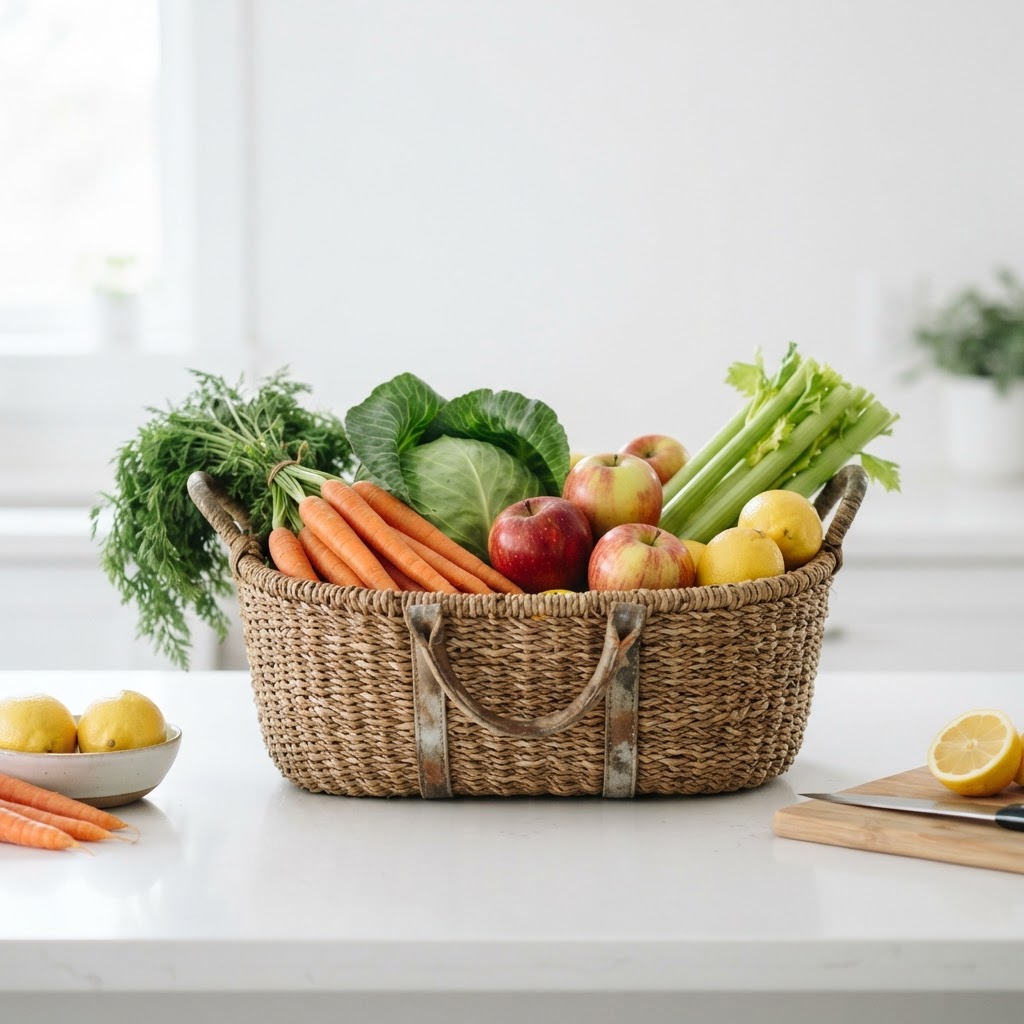
The ingredients that address those exact problems are sitting in the cheapest section of your grocery store right now. Carrots. Celery. Cucumbers. Ginger. Lemon. Cabbage. Green apple. These are not budget substitutes for the real thing. They are the real thing. Ginger is one of the most studied anti-inflammatory compounds on the planet. Celery contains compounds that reduce uric acid, which directly affects joint pain. Cucumber is over 95 percent water and helps flush the system that makes you feel bloated by midday.
Cheap produce is not inferior produce. The most anti-inflammatory ingredients in the store are also the cheapest. The belief that you need to spend more to get results is the thing that has been costing you money and keeping you from feeling better.
What You Can Actually Do About It
- Build your base with the cheapest produce first. Carrots, celery, cucumbers, and cabbage are low-cost, high-volume, and do the heavy lifting for digestion and inflammation. These should make up the majority of what goes into your juicer.
- Use ginger and lemon as your power additions, not expensive powders. A two-inch knob of ginger costs under a dollar and delivers more anti-inflammatory benefit than most supplements. Half a lemon adds liver support and improves absorption. Neither will break your grocery budget.
- Skip the bottled cold-pressed juices entirely. A single store-bought juice can cost $8 to $14. That same money buys enough produce to make four to six servings at home. Bottled juice is also pasteurized, which kills the enzymes your gut actually needs.
- Store your produce correctly so nothing goes to waste. Wrap leafy greens loosely in a damp paper towel and keep them in a sealed bag. Store ginger root in the freezer and grate it directly into your juicer. Citrus lasts two to three weeks at room temperature. Stopping waste is the fastest way to lower your weekly cost.
- Plan three days at a time, not seven. Buying for a full week sounds economical but leads to spoilage. Buy for three days, juice on day one and day three, and adjust based on what held up. This keeps your spend tight and your ingredients fresh.
A Cheap, Powerful Juice You Can Make Today
The Budget Anti-Inflammation Base
Ingredients:
- 3 medium carrots
- 3 stalks of celery
- 1 medium cucumber
- 1 two-inch piece of fresh ginger root
- 1 half lemon, peeled
- 1 small green apple (optional, for palatability)
Instructions:
- Wash all produce thoroughly. No need to peel the carrots or cucumber unless they are waxed.
- Cut everything into pieces small enough to feed through your juicer chute. Feed the ginger through first, followed by the celery, then the rest.
- Stir the juice once it is finished and drink it within 20 minutes for maximum enzyme activity.
- If the taste is too strong at first, increase the cucumber or add the green apple to soften it without adding significant sugar.
Why this works for your specific problems:
Ginger and carrot together deliver a concentrated dose of gingerols and beta-carotene, both of which have documented effects on reducing systemic inflammation and joint pain over time with consistent use. Celery contains apigenin and luteolin, compounds that target the inflammatory pathways most active in adults over 40. Cucumber and lemon work together to support kidney filtration, which reduces the bloating and fluid retention that gets worse with age as your lymphatic and digestive systems slow down. The total cost for this recipe runs between $2.00 and $3.50 depending on your location and store.
Start Your 365-Day Juice Program
Stop guessing what to juice. Get a plan built for your body in 30 seconds.
Start Your Reset — $37 →Related Reading
If you found this useful, these two posts go deeper into the habits and biology behind what you are dealing with:
The Right Way to Start Juicing If You've Never Done It Before
Keep Reading
Get Your Personalized Juice Plan
Stop guessing what to juice. Get a plan built for your body in 30 seconds.
Fix My Symptoms Now →