How Processed Food Rewires Your Hunger Signals After 40
You eat a full meal and you're hungry again an hour later. Or you're not hungry at all until suddenly you're ravenous and reaching for whatever is closest. If your hunger feels broken, it's not a lack of willpower. Your body has been chemically manipulated, and after 40, the damage runs deeper than most people realize.
Why This Happens After 40
Processed foods are engineered to override your natural hunger and fullness signals. They hit the brain's reward system hard, flooding it with dopamine and training your body to crave more even when you're not actually hungry.
Before 40, your body had more resilience. Hormones like leptin and ghrelin, which control hunger and satiety, were working closer to full capacity. You could eat something junky, recover, and move on.
After 40, that buffer shrinks. Estrogen and testosterone levels drop, which directly affects how your brain processes food reward signals. Cortisol, which tends to run higher as we age and carry more stress, blunts your sensitivity to leptin. That means your brain stops getting the message that you're full, even when your stomach is.
Add in slower digestion, a gut microbiome that's had decades of processed food exposure, and an inflammatory baseline that keeps climbing, and you have a system that is genuinely struggling to regulate itself.
The Real Problem (It's Not What You Think)
Most people over 40 assume their hunger problems come down to calories or portion control. Eat less, move more. But that framework completely misses what's actually happening in your body.
Processed foods contain a combination of refined carbohydrates, industrial seed oils, artificial sweeteners, and chemical additives that disrupt your gut lining. When the gut lining is compromised, something called intestinal permeability increases. Inflammatory compounds leak into the bloodstream. Your immune system responds. Systemic inflammation rises.
That chronic low-grade inflammation directly interferes with insulin sensitivity. When your cells stop responding to insulin the way they should, blood sugar becomes unstable. Unstable blood sugar means constant hunger signals, intense cravings for sugar and salt, energy crashes in the afternoon, and that bloated, sluggish feeling that never fully goes away.
This is not a discipline problem. This is a biological feedback loop that processed food helped create, and your body after 40 is less equipped to break it on its own.
The bloating you feel after eating is often your gut reacting to ingredients it was never designed to process. The joint pain and stiffness many people experience is inflammation expressing itself through connective tissue. The low energy is your mitochondria struggling to function in an inflamed, nutrient-depleted environment. These are all connected, and they all trace back to what processed food does to your hunger and metabolic signaling over time.
What You Can Do About It
The good news is that your body wants to rebalance. It responds quickly when you give it the right inputs. Here is where to start.
Stop managing hunger with willpower and start managing blood sugar with real food. Whole vegetables, quality protein, and healthy fats stabilize blood sugar in a way that processed food never can. When blood sugar is stable, hunger signals normalize within days. Not weeks. Days.
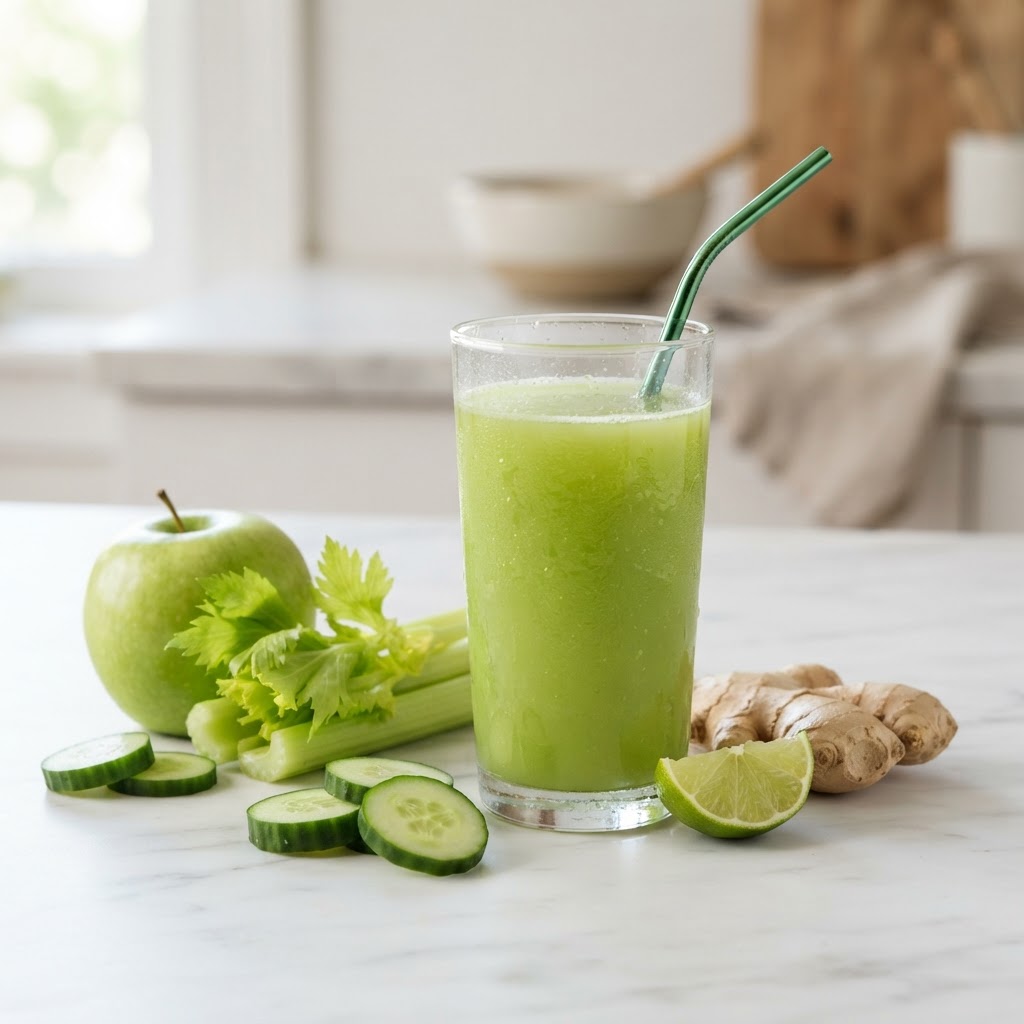
Flood your system with micronutrients your gut can actually absorb. Cold-pressed juice from vegetables like celery, cucumber, ginger, and leafy greens delivers enzymes and nutrients directly into your bloodstream without taxing your digestive system. This matters after 40 because digestive enzyme production naturally declines and your ability to extract nutrients from food drops significantly.
Cut out the foods that keep the inflammation loop running. Ultra-processed snacks, refined seed oils like canola and soybean oil, artificial sweeteners, and packaged foods with long ingredient lists are all keeping your hunger signals dysregulated. You do not need to be perfect, but you do need to reduce the volume and frequency.
Give your gut lining time and support to repair. Removing inflammatory foods and adding anti-inflammatory inputs like ginger, turmeric, leafy greens, and fiber from whole vegetables allows the gut to begin healing. As the gut heals, leptin sensitivity improves, and your brain starts receiving accurate hunger and fullness signals again.
Be consistent for at least two weeks before expecting results. Your hunger signals did not get disrupted overnight. They will not reset overnight. But most people who clean up their diet and add targeted juicing report noticeable changes in bloating, energy, and cravings within 10 to 14 days.
Start Your 365-Day Juice Program
Stop guessing what to juice. Get a plan built for your body in 30 seconds.
Start Your Reset — $37 →Keep Reading
Get Your Personalized Juice Plan
Stop guessing what to juice. Get a plan built for your body in 30 seconds.
Fix My Symptoms Now →