How to Reduce Water Retention and Bloating Overnight
You wake up, look in the mirror, and your stomach looks like you swallowed a basketball. Your rings are tight, your pants feel two sizes too small, and you did not even eat anything bad. If this sounds familiar, you are not imagining it and you are not alone.
Why This Happens After 40
After 40, your body starts working against you in ways it never did before. Hormonal shifts, slower digestion, and declining kidney efficiency all combine to make water retention and bloating far more common and far more stubborn.
Estrogen and progesterone fluctuations in women cause the body to hold onto excess fluid, especially in the belly, hands, and legs. Men are not off the hook either. Declining testosterone slows gut motility, which means food sits longer, ferments more, and causes that tight, uncomfortable pressure you feel by mid-afternoon.
Cortisol also plays a bigger role after 40. Chronic low-grade stress keeps cortisol elevated, which signals your kidneys to retain sodium and water. The result is that puffy, heavy feeling that seems to appear out of nowhere and refuses to leave.
The Real Problem (It's Not What You Think)
Most people blame salty food or drinking too much water. But the real culprit is usually inflammation and a sluggish lymphatic system, not just what you ate last night.
When your gut lining is irritated, your body triggers an inflammatory response. That inflammation causes tissues to hold fluid as a protective mechanism. It is your body trying to heal itself, but the side effect is that swollen, bloated feeling you cannot seem to shake.
Your lymphatic system, which is responsible for draining excess fluid from tissues, also slows down as you age and as you move less. Unlike your cardiovascular system, the lymph system has no pump. It depends on movement, hydration, and certain foods to keep it flowing. When it stagnates, fluid pools in your tissues and bloating becomes a daily battle.
This means cutting salt is not enough. You have to address inflammation and lymph flow at the same time, and that is where the right combination of nutrients makes a real difference.
What You Can Do About It
Drink water with lemon first thing in the morning. This sounds too simple, but starting your day with 16 ounces of water and fresh lemon juice kickstarts your lymphatic system and supports liver detox pathways. Your liver processes excess hormones and inflammatory compounds that contribute to bloating, so giving it a head start matters.
Reduce processed carbs and alcohol the night before. Both cause rapid water retention. Refined carbs cause your body to store glycogen, and every gram of glycogen holds about three grams of water. Alcohol dehydrates you at the cellular level while simultaneously causing fluid retention in tissues. Even one heavy night can leave you puffy for 48 hours.
Move your body within 30 minutes of waking. A brisk 10-minute walk or light stretching manually pumps your lymphatic system and gets fluid moving out of tissues and toward elimination. You do not need an intense workout. You just need movement early.
Eat potassium-rich foods throughout the day. Potassium directly counteracts sodium's water-retaining effects. Cucumbers, celery, leafy greens, and beets are all high in potassium and have natural diuretic properties that help your kidneys flush excess fluid without stripping you of electrolytes.
Juice targeted vegetables in the evening. Certain raw vegetables contain enzymes and phytonutrients that reduce gut inflammation, support kidney function, and pull excess fluid out of tissues overnight while you sleep. This is where a targeted juice recipe becomes a genuine tool rather than just a trend.
A Simple Juice Recipe That Helps
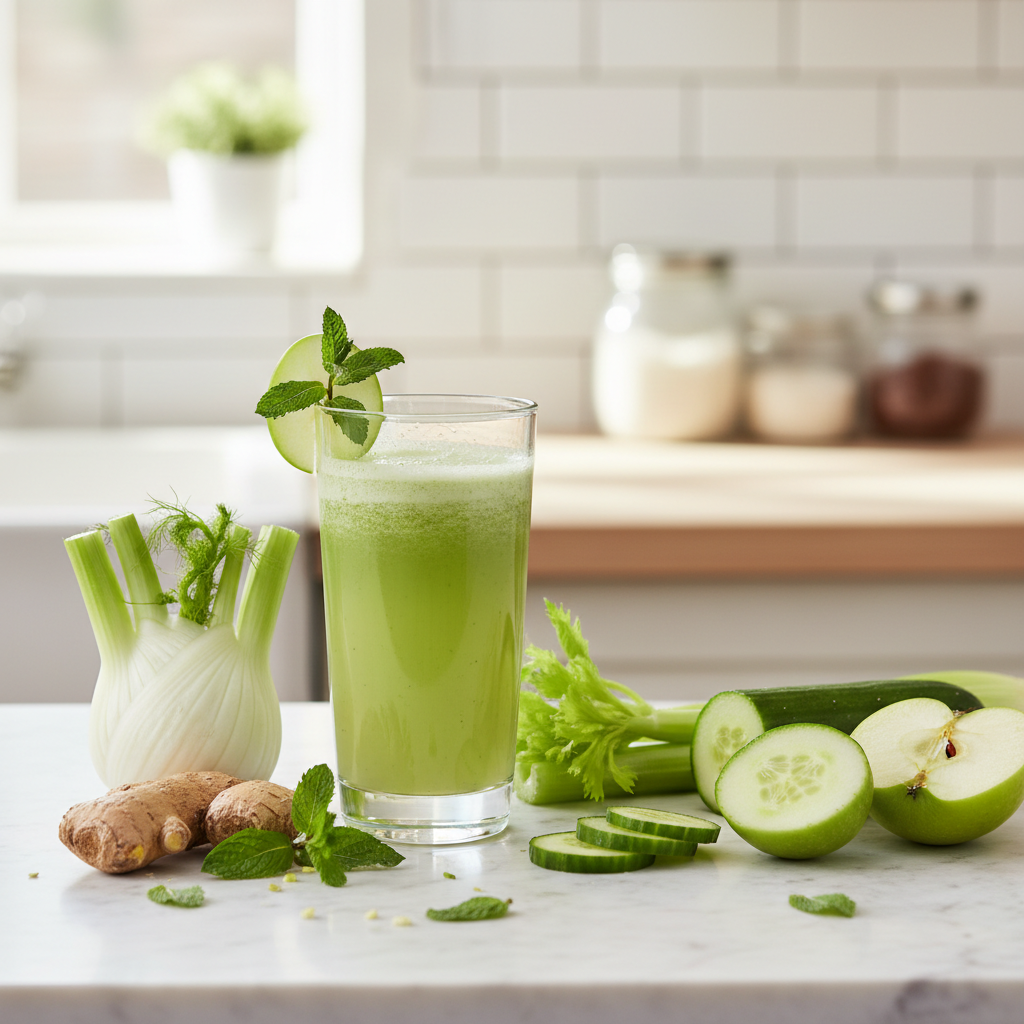
This recipe is specifically formulated to address the three main drivers of bloating and water retention in adults over 40: inflammation, sluggish lymph flow, and excess sodium retention. Drink it in the evening, about an hour before bed, for the best results.
Overnight Deflate Juice
Ingredients
- 1 large cucumber (with skin, about 2 cups chopped)
- 4 stalks of celery
- 1 cup fresh pineapple chunks
- 1 inch fresh ginger root, peeled
- 1 inch fresh turmeric root, peeled (or 1/2 teaspoon ground turmeric)
- 1/2 lemon, peeled
- Small handful of fresh parsley (about 1/4 cup)
Instructions
- Wash all produce thoroughly, especially the parsley and celery.
- Peel the ginger and turmeric root. Leave the cucumber skin on for extra potassium and chlorophyll.
- Feed all ingredients through your juicer, alternating the soft ingredients like pineapple with the harder ones like ginger to help the juicer process everything evenly.
- Stir the juice well and drink immediately. If you need to store it, keep it in a sealed glass jar in the refrigerator for no more than 24 hours.
Why Each Ingredient Works
Cucumber is made up of about 96 percent water and contains caffeic acid, which actively reduces fluid retention by inhibiting an enzyme that promotes inflammation. It is also a mild natural diuretic that supports kidney filtration without causing electrolyte loss.
Celery contains phthalides, compounds that relax arterial walls and improve circulation. It is also rich in potassium and has a long history as a natural diuretic. The 3-n-butylphthalide in celery specifically reduces the buildup of fluid in tissue.
Pineapple contains bromelain, a proteolytic enzyme that breaks down inflammatory proteins in the gut lining. Gut inflammation is one of the primary reasons fluid pools in abdominal tissues. Bromelain also aids protein digestion, which reduces fermentation and gas production overnight.
Ginger accelerates gastric emptying, which means food moves through your digestive tract faster and has less time to ferment and cause gas. It is also a potent anti-inflammatory that reduces prostaglandin activity, the same mechanism behind menstrual bloating in women.
Turmeric contains curcumin, one of the most researched anti-inflammatory compounds available. It reduces NF-kB, a protein that triggers inflammatory responses in the gut and throughout the body. Chronic low-grade inflammation is the underlying driver of persistent bloating after 40, and turmeric addresses it directly.
Lemon supports liver detox pathways and stimulates bile production. Bile breaks down fats and helps clear excess hormones and inflammatory byproducts from your system. The citric acid also has a mild diuretic effect that encourages kidney filtration overnight.
Parsley is one of the most potent natural diuretics available. It works by inhibiting the sodium-potassium pump in your kidneys, which causes the kidneys to excrete more sodium and water. It is also rich in apigenin, a flavonoid with proven anti-inflammatory effects.
Most people who drink this juice consistently for three to five evenings report waking up with noticeably less puffiness, a flatter stomach, and less stiffness in their hands and joints. The effects build over time as inflammation decreases and your kidneys and lymphatic system begin working more efficiently.
Start Your 365-Day Juice Program
Stop guessing what to juice. Get a plan built for your body in 30 seconds.
Start Your Reset — $37 →Keep Reading
Get Your Personalized Juice Plan
Stop guessing what to juice. Get a plan built for your body in 30 seconds.
Fix My Symptoms Now →