How Chronic Stress Destroys Your Gut Lining After 40
You're eating cleaner than ever, but your stomach still feels like a war zone. The bloating, the brain fog, the joint pain that seems to come out of nowhere — you've tried cutting gluten, dairy, even sugar, and nothing sticks. What if the problem isn't your diet at all?
Why This Happens After 40
Your body handles stress very differently after 40 than it did in your twenties. Back then, cortisol — your primary stress hormone — would spike, do its job, and come back down. Your gut barely noticed.
Now it's a different story. After 40, cortisol recovery slows down. Chronic stress keeps cortisol elevated for longer stretches, and your gut takes the hit every single time.
High cortisol directly reduces blood flow to your digestive tract. It slows the production of protective mucus that lines your intestinal walls. It disrupts the tight junctions between your gut cells — the microscopic seals that keep food particles, bacteria, and toxins from leaking into your bloodstream.
When those seals break down, you get what's commonly called leaky gut. And leaky gut doesn't just cause digestive problems. It triggers systemic inflammation that shows up as joint pain, skin issues, fatigue, and mood swings. You're not falling apart. Your gut lining is under constant assault.
The Real Problem (It's Not What You Think)
Most people over 40 assume their symptoms are just aging. Doctors tell them their labs look fine. They try elimination diets. They buy probiotics. Some things help a little, but nothing holds.
Here's the shift: the problem isn't just what you're eating. It's that your gut lining is compromised and inflamed, and stress is the accelerant that keeps the fire burning.
When your gut lining is damaged, even healthy food can trigger a reaction. Your immune system — nearly 70 percent of which lives in your gut — stays in a constant low-grade state of alert. That chronic immune activation is what produces the fatigue, the aching joints, the swelling, and the mental fog that no amount of sleep seems to fix.
Stress also wipes out the beneficial bacteria in your gut. Cortisol acts like a weed killer for your microbiome. With fewer good bacteria, bad bacteria and yeast overgrow. Digestion slows. Gas and bloating get worse. The cycle reinforces itself and most people never connect the dots back to stress as the root driver.
You're not broken. Your gut is reacting exactly the way it's designed to react under prolonged threat. The problem is that modern life keeps that threat signal switched on all the time.
What You Can Do About It
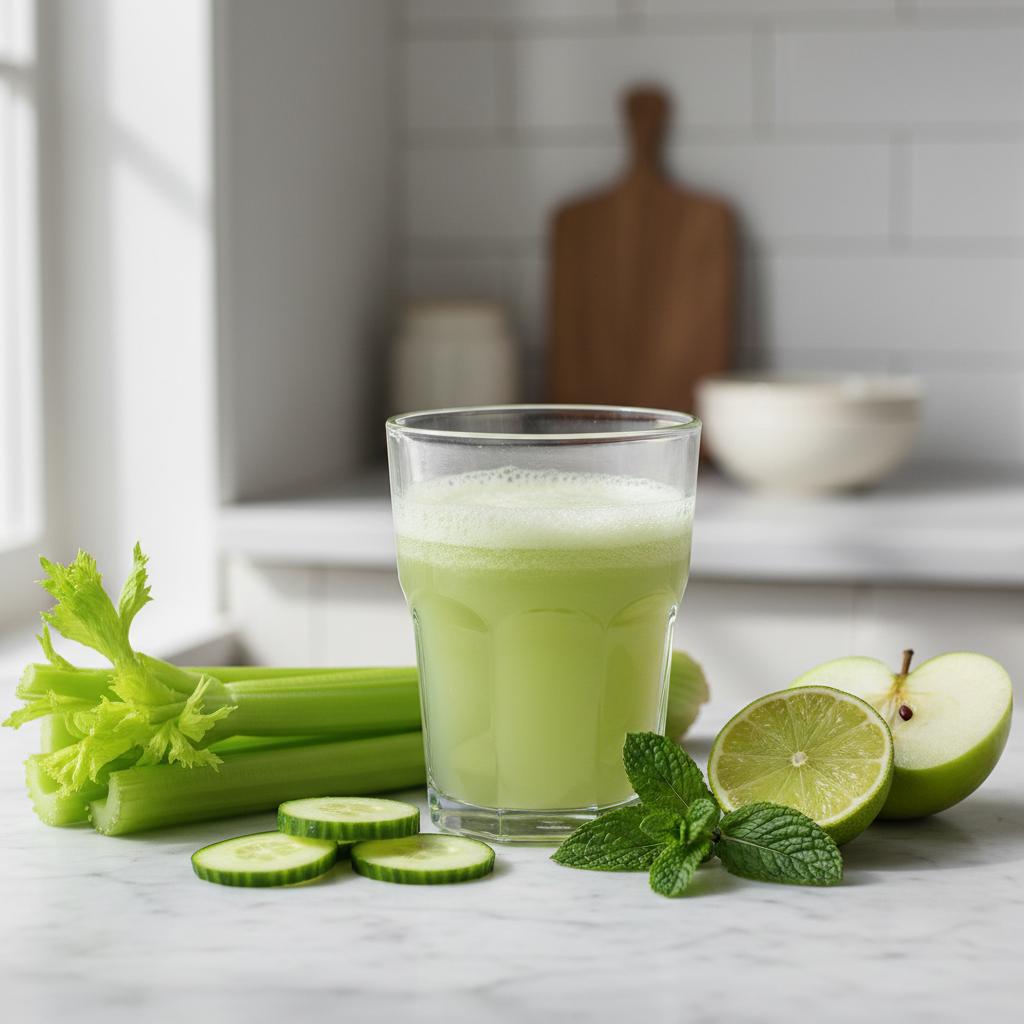
1. Eat to rebuild the gut lining, not just to avoid symptoms. Certain plant compounds actively support the repair of intestinal cells. Chlorophyll-rich greens like celery, cucumber, and parsley reduce intestinal inflammation. Ginger and turmeric suppress the inflammatory signals that cortisol triggers. Aloe vera juice has well-documented effects on soothing gut tissue. Fresh juicing gets these compounds into your system fast, without the digestive burden of heavy meals.
2. Lower the cortisol spike before meals. Eating while stressed is one of the most underrated causes of digestive damage. Cortisol shuts down stomach acid production and slows enzyme release, so food sits and ferments instead of being properly broken down. Even two minutes of slow breathing before eating can shift your nervous system from fight-or-flight into rest-and-digest. It sounds too simple. It works.
3. Cut the gut-wreckers that cortisol makes worse. Alcohol, refined sugar, and processed seed oils already damage gut lining on their own. Under elevated cortisol, their impact is amplified. You don't need to be perfect, but if stress is high, these three are the first things to reduce. They are pouring gasoline on a fire your body is already struggling to put out.
4. Prioritize sleep like it's medicine — because it is. The gut lining repairs itself during deep sleep. Growth hormone released during sleep specifically stimulates intestinal cell regeneration. Chronic sleep deprivation keeps cortisol elevated the next day, which means the repair window never fully opens. Seven to eight hours is not a luxury after 40. It is the baseline your gut requires to heal.
5. Use targeted juicing to flood the gut with anti-inflammatory nutrients. Whole fruits and vegetables contain compounds your gut cells use as building blocks. Zinc from pumpkin seeds, L-glutamine from leafy greens, and quercetin from apples all play direct roles in tight junction repair. The right juice combinations, timed correctly, can give your gut a consistent stream of healing nutrients without taxing a digestive system that is already under stress.
Start Your 365-Day Juice Program
Stop guessing what to juice. Get a plan built for your body in 30 seconds.
Start Your Reset — $37 →Keep Reading
Get Your Personalized Juice Plan
Stop guessing what to juice. Get a plan built for your body in 30 seconds.
Fix My Symptoms Now →