Why Fermented Foods Are Non-Negotiable for Gut Health After 40
You eat reasonably well. You drink enough water. You even exercise. But you still wake up bloated, drag yourself through the afternoon, and feel like your body is working against you. Here is the part nobody tells you: your gut is running on a fraction of the bacteria it needs, and it has been declining for years.
Why This Happens After 40
Your gut microbiome does not stay static. It shifts constantly based on age, stress, diet, medications, and environment. After 40, that shift tends to go in one direction: down.
The beneficial bacteria that once kept your digestion smooth, your inflammation low, and your immune system regulated start to thin out. Meanwhile, the opportunistic bacteria that cause bloating, gas, and sluggish digestion move in to fill the space.
Add decades of antibiotic use, processed food, chlorinated water, and chronic stress to that equation, and you have a gut environment that is genuinely struggling to do its job. This is not a minor inconvenience. Your gut controls more than digestion. It influences your mood, your joint inflammation, your skin, your hormones, and your energy levels. When it breaks down, everything feels off because everything actually is off.
The bloating after meals is not random. The afternoon energy crash is not laziness. The joint aches that seem to come out of nowhere are not just aging. They are signals from a gut that is out of balance.
The Real Problem (It's Not What You Think)
Most people over 40 assume their symptoms are simply what getting older feels like. They accept the bloating. They drink more coffee to fight the fatigue. They take ibuprofen for the inflammation and move on.
But the root issue is not age. It is bacterial diversity, or more precisely, the lack of it.
Your digestive system was built to process food with the help of trillions of microorganisms. Those microorganisms break down compounds your body cannot handle alone, produce vitamins your cells depend on, regulate the immune responses that drive inflammation, and send signals directly to your brain through the gut-brain axis.
When that bacterial population collapses, your body loses its co-processors. It does not stop working, but it works harder, slower, and less efficiently. That is the fatigue. That is the bloating. That is the brain fog that makes you feel like you are thinking through wet concrete.
Most people try to fix this with fiber or probiotics supplements. Fiber helps, but it is not enough. Probiotic supplements are inconsistent and most strains never survive long enough to colonize your gut. What your gut actually needs is living food, the kind that delivers active cultures directly to your digestive system in a form your body recognizes and can use immediately.
That is where fermented foods come in, and why they are not optional.
What You Can Do About It
You do not need to overhaul your entire diet. You need to make targeted, consistent additions that rebuild what your gut has lost. Here is where to start.
Add fermented foods daily, not occasionally. Kimchi, sauerkraut, kefir, plain yogurt with live cultures, miso, and kombucha all deliver active bacteria directly to your gut. A few tablespoons of sauerkraut with lunch or a small glass of kefir in the morning is enough to start shifting your microbial environment. Consistency matters more than quantity here.
Pair fermented foods with prebiotic foods. Probiotics need something to eat. Prebiotics are the fiber-rich foods that feed beneficial bacteria and help them survive long enough to do their job. Garlic, onion, leeks, asparagus, green bananas, and oats are strong prebiotic sources. Eating them together with fermented foods accelerates the benefit.
Cut the foods that kill your gut bacteria. Sugar, refined carbohydrates, alcohol, and ultra-processed food feed harmful bacteria and starve the beneficial ones. You do not have to be perfect, but if you are loading up on fermented foods in the morning and eating fast food at night, you are running in place. Small reductions compound over time.
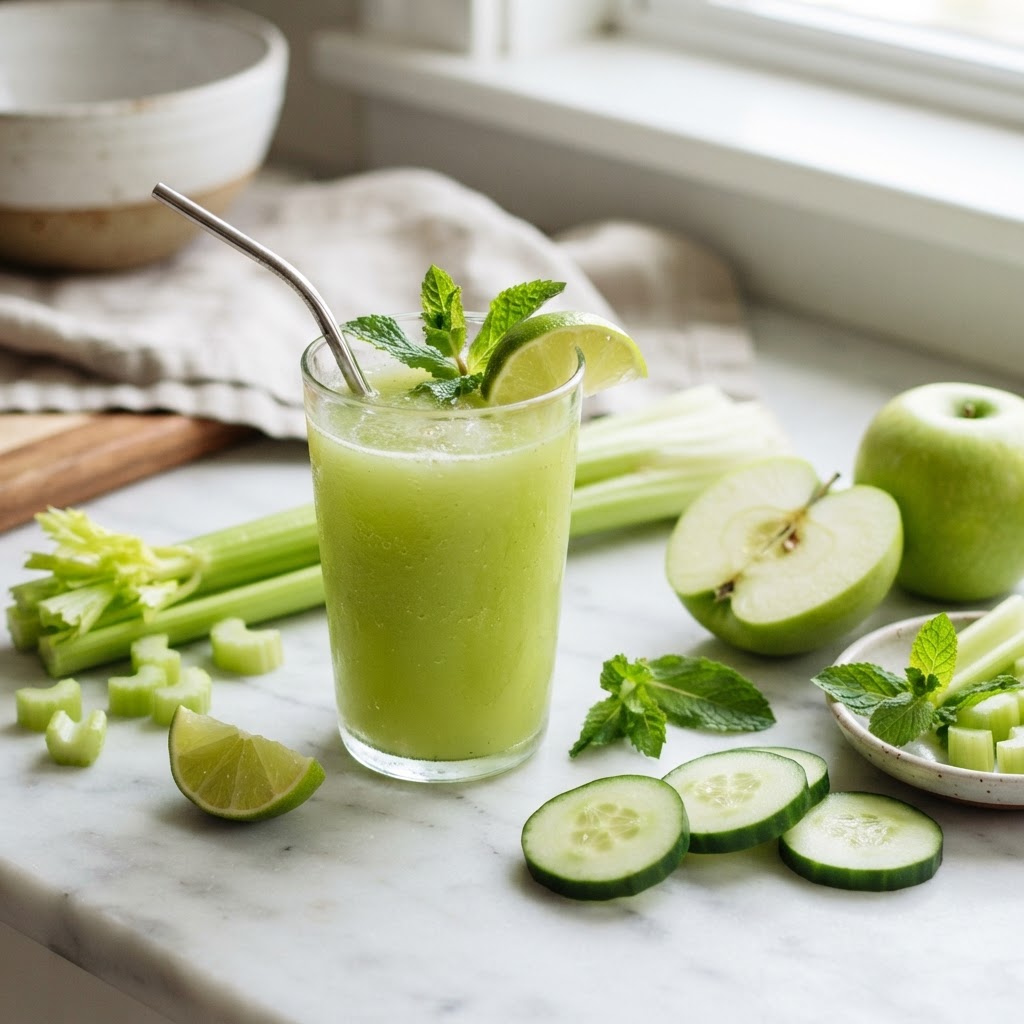
Use juicing strategically to support your gut lining. Certain juices, particularly those built around ginger, aloe vera, celery, beets, and leafy greens, help reduce gut inflammation and support the mucosal lining that beneficial bacteria need to thrive. Juicing is not a replacement for fermented foods, but when done right, it amplifies what fermented foods are already doing.
Give it time and track how you feel. Gut restoration is not a two-day process. Most people start noticing real changes in bloating and energy within two to four weeks of consistent fermented food intake. Keep a simple log of how your digestion, energy, and joint comfort change week over week. The pattern will motivate you to stay consistent.
Your gut after 40 is not broken. It is depleted. And depleted systems can be rebuilt, but only if you give them what they actually need.
Start Your 365-Day Juice Program
Stop guessing what to juice. Get a plan built for your body in 30 seconds.
Start Your Reset — $37 →Get Your Personalized Juice Plan
Stop guessing what to juice. Get a plan built for your body in 30 seconds.
Fix My Symptoms Now →