Why Your Bloating Gets Worse in the Afternoon After 40
You wake up feeling fine. By 2 or 3 in the afternoon, your stomach looks like a balloon and your pants feel two sizes too small. You have not changed anything. You are eating the same foods you always have. But something is clearly different.
This is one of the most common complaints we hear from people over 40, and the frustrating part is that most of them have already tried cutting out bread, drinking more water, or skipping lunch entirely. It does not help. That is because they are treating the wrong problem.
Why This Happens After 40
Your digestive system does not work the same way it did in your 30s. That is not a scare tactic. It is biology.
After 40, your body produces significantly less stomach acid and fewer digestive enzymes. These are the tools your gut uses to break down food efficiently. When they decline, food sits in your digestive tract longer than it should. It ferments. Gas builds up. And by mid-afternoon, after a full morning of eating and digesting, that buildup becomes visible and uncomfortable.
On top of that, your gut motility slows down. That means food moves through your system at a slower pace. So even a light lunch can compound the backlog that started at breakfast, and the pressure accumulates throughout the day.
Hormonal shifts also play a role here. For women, declining estrogen and progesterone levels affect gut function and fluid retention. For men, lower testosterone levels are linked to slower metabolism and reduced digestive efficiency. Both create conditions where afternoon bloating becomes the new normal.
Add in chronic low-grade inflammation, which becomes increasingly common after 40, and your intestinal lining becomes more reactive to foods it used to handle without issue.
The Real Problem (It Is Not What You Think)
Most people assume afternoon bloating is about what they ate for lunch. So they start eliminating foods. First gluten. Then dairy. Then beans. Then onions. The list grows and the bloating stays.
The real issue is not a specific food. It is that your body has lost the capacity to process food the way it once did. Your digestive fire, to borrow a useful term, has weakened. And when digestion is weak, almost any food can cause problems.
This also explains why you might be fine eating something one day and bloated from it the next. It is not the food that changed. It is how well your system was functioning when you ate it.
There is also a gut microbiome component. After 40, the diversity of your gut bacteria tends to decline. Certain strains of bacteria that help with fermentation and gas regulation become less abundant. When your microbiome is out of balance, your gut produces excess gas from foods that would not have bothered you years ago.
The afternoon timing specifically comes down to cumulative load. You have been digesting all day. By early afternoon, a slower, enzyme-deficient, inflammation-prone digestive system is simply overwhelmed. The bloating is the symptom. The root cause is a digestive system that needs real support.
What You Can Do About It
Support your digestive enzymes before meals. Since your body is producing fewer enzymes on its own, giving it a head start matters. Certain fresh juices, particularly those made with pineapple and papaya, contain natural enzymes called bromelain and papain that assist with protein digestion. Drinking a small amount before eating can reduce the workload on your gut.
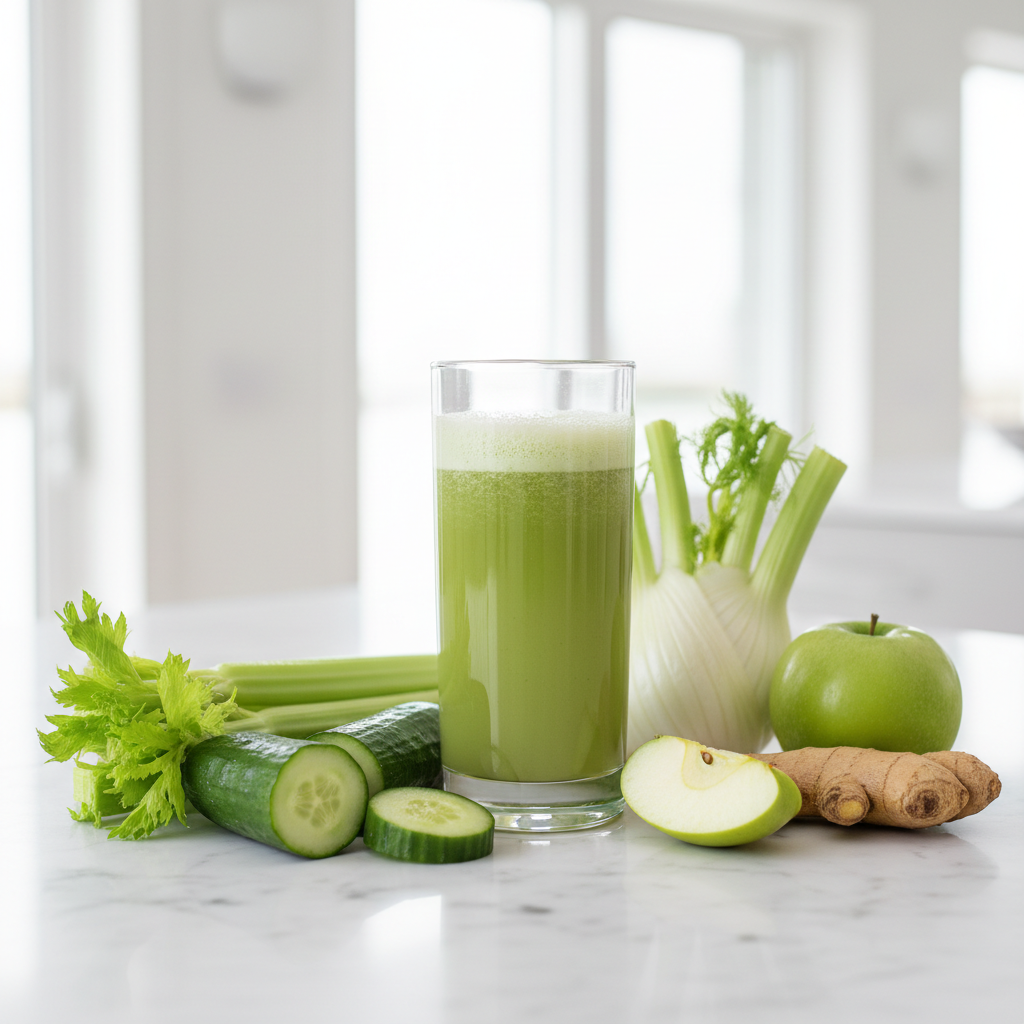
Reduce the inflammatory load in your diet. Chronic inflammation makes your gut lining more permeable and reactive. Anti-inflammatory foods and juices, especially those built around cucumber, celery, ginger, and leafy greens, help calm the underlying irritation that makes bloating worse. This is not about a one-time juice. It is about consistently reducing what is triggering your gut.
Stop eating large meals in the middle of the day. Your digestive capacity is not at its peak in the afternoon. A large lunch after a moderate breakfast puts enormous demand on a system that is already working hard. Lighter meals spaced out with liquids that support digestion can make a significant difference within a few days.
Address the gut microbiome directly. Fermented foods, prebiotic vegetables, and specific juicing combinations that feed beneficial bacteria can help restore the microbial balance that keeps gas production under control. This takes consistency, but the payoff is real.
Watch what you drink, not just what you eat. Carbonated beverages, alcohol, and high-sugar drinks all contribute to afternoon bloating in ways that people consistently underestimate. Replacing even one of those daily with a targeted vegetable juice can shift how your gut feels by the time late afternoon rolls around.
Start Your 365-Day Juice Program
Stop guessing what to juice. Get a plan built for your body in 30 seconds.
Start Your Reset — $37 →Get Your Personalized Juice Plan
Stop guessing what to juice. Get a plan built for your body in 30 seconds.
Fix My Symptoms Now →