The Real Reason Your Knees Hurt When You Walk Downstairs
You grab the railing. You slow down. Maybe you even dread staircases now. If your knees have started making you feel decades older than you are, you are not alone and you are not just falling apart.
Why This Happens After 40
After 40, your body starts producing less collagen and synovial fluid. That fluid is what keeps your joints cushioned and moving smoothly. Without enough of it, bone and cartilage start grinding against each other under pressure.
Walking downstairs is worse than walking up because it puts roughly three to four times your body weight onto the knee joint. That is not a small amount of force, especially when the cushioning is already compromised.
Hormonal shifts also play a role. Estrogen and testosterone both help regulate cartilage repair and inflammation. As those levels drop, your body becomes slower to recover from the daily wear and tear your knees take.
Most people chalk this up to aging and accept it. That is a mistake, because the real driver of this pain is something most doctors do not spend much time talking about.
The Real Problem (It's Not What You Think)
The pain you feel in your knees is not just mechanical. It is inflammatory. Chronic low-grade inflammation is what accelerates cartilage breakdown, increases pain sensitivity, and slows down the repair process your body is trying to run.
Here is what most people miss. That inflammation is not coming from your knees. It is coming from your gut and your diet. When your digestive system is inflamed, inflammatory signals travel through your bloodstream and settle into your weakest joints. For a lot of people over 40, that is the knees.
Sugar, processed foods, refined seed oils, and alcohol all feed that internal fire. Your body is not broken. It is reacting to a constant stream of inputs that tell it to stay in a state of alert. That alert state is inflammation.
The good news is that inflammation responds quickly to what you put in your body. Faster than most people expect. Within days of reducing the inputs that cause it and adding the nutrients that fight it, people notice a real difference in how their joints feel.
This is why anti-inflammatory juicing works. Raw fruits and vegetables are loaded with enzymes, antioxidants, and phytonutrients that directly cool down the inflammatory process. You are not masking the pain. You are addressing what is causing it.
What You Can Do About It
Cut the biggest inflammation triggers first. Sugar, alcohol, fried food, and anything made with canola or soybean oil should be the first things to go. You do not have to be perfect. Even a significant reduction makes a measurable difference.
Add tart cherry to your routine. Tart cherry is one of the most well-studied natural anti-inflammatories for joint pain. It contains anthocyanins that block some of the same pathways as ibuprofen without the side effects. Juice it fresh or use an unsweetened concentrate.
Get serious about hydration. Synovial fluid is water-based. When you are even mildly dehydrated, joint lubrication suffers. Most adults over 40 are chronically under-hydrated. Aim for at least half your body weight in ounces of water per day.
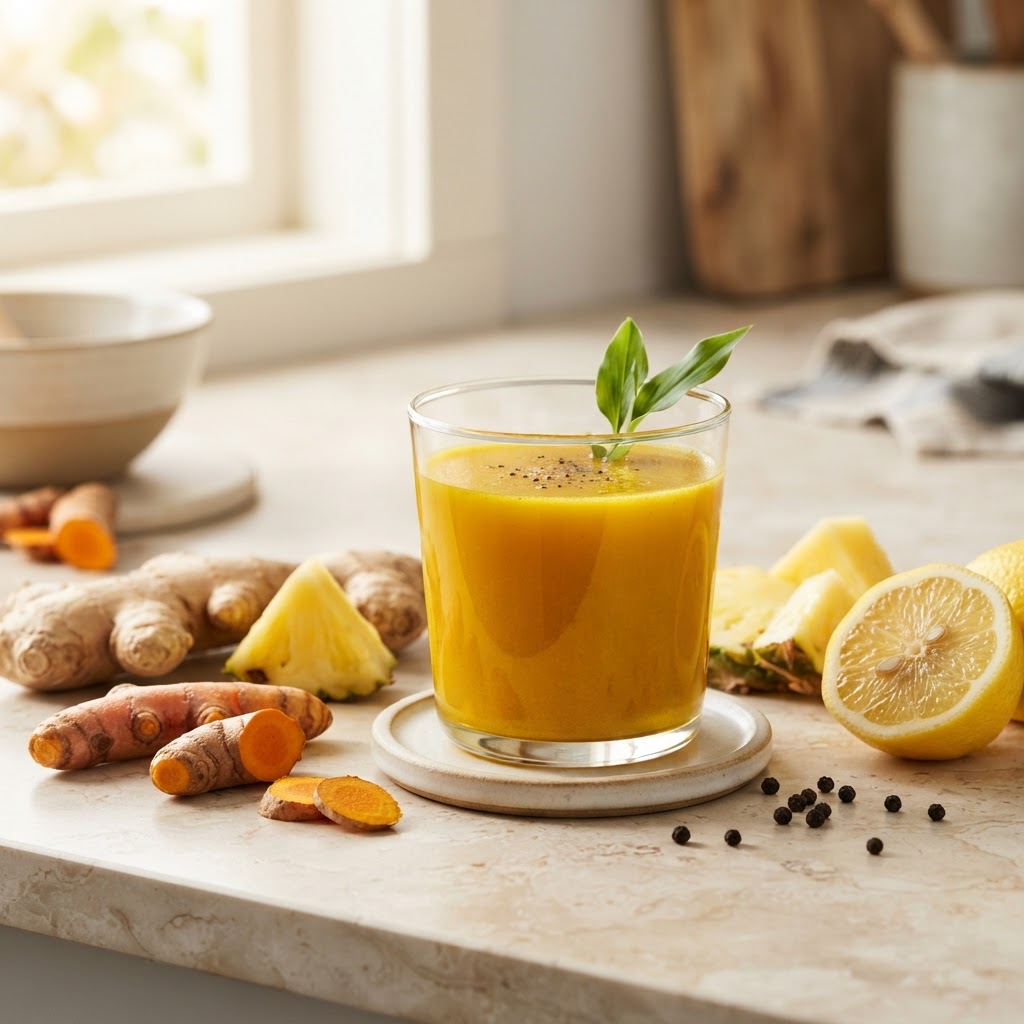
Juice with ginger and turmeric daily. Both of these roots are clinical heavy hitters for inflammation. Ginger inhibits inflammatory compounds directly. Turmeric with black pepper has been shown in multiple studies to reduce joint pain and stiffness. These are not trends. They are tools that work.
Support your gut, not just your joints. Leafy greens, celery, cucumber, and beets all support liver function and gut health, which is where systemic inflammation often starts. When you clean up what is happening in your digestive system, your joints feel it.
Start Your 365-Day Juice Program
Stop guessing what to juice. Get a plan built for your body in 30 seconds.
Start Your Reset — $37 →Keep Reading
Get Your Personalized Juice Plan
Stop guessing what to juice. Get a plan built for your body in 30 seconds.
Fix My Symptoms Now →